


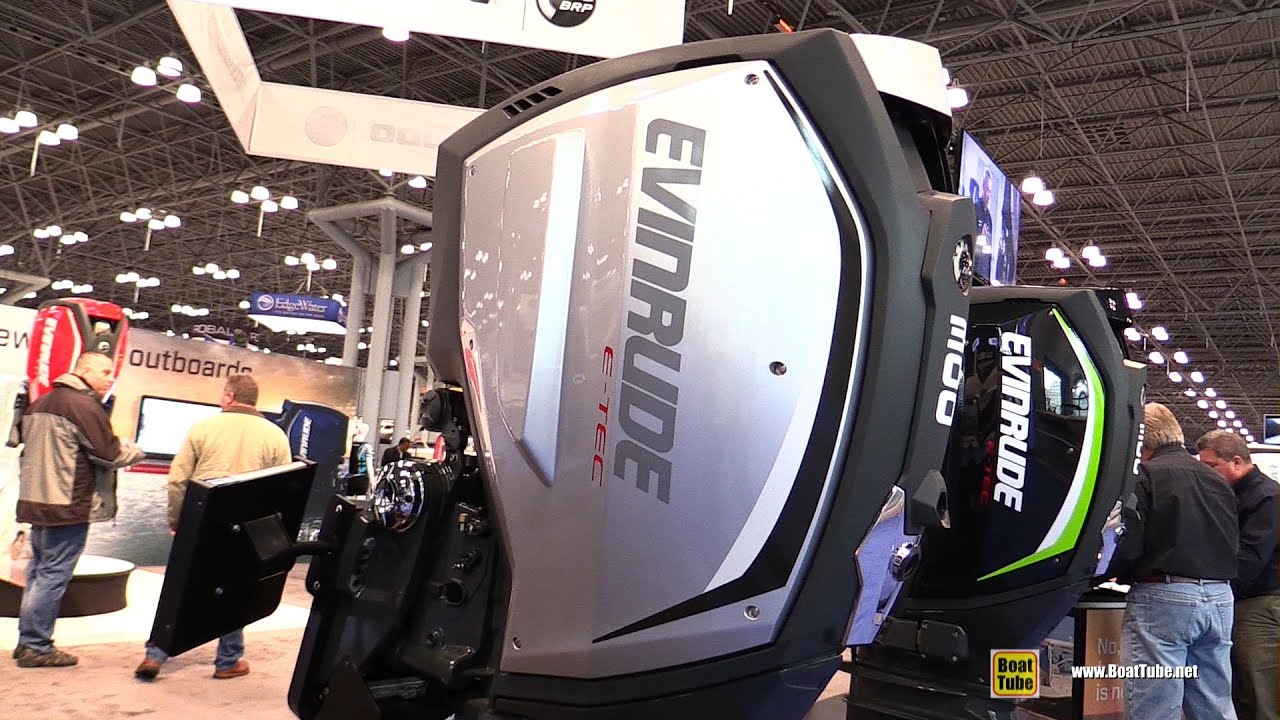
What You Need to Know Before Buying a Used Evinrude in 2025
The Honest Evinrude E-TEC Buyer’s Guide: What I’ve Learned From 47 Years of Fixing Outboards
Featured Image Description:
A photo of Tom Wilkins standing next to an Evinrude E-TEC on a test stand, holding a diagnostic tablet. Caption: *”Tom Wilkins, Master Marine Mechanic — 47 years, 12,000+ engines serviced.”*
Author: Tom Wilkins
Date: April 2025 (keep this updated)
Reading Time: 18 minutes
Section 1: Let Me Start With Some Honesty
Body text:
I’ve been fixing outboards since 1978. I’ve worked on everything — from old two-stroke Johnsons that smoked like a campfire to brand new four-stroke Yamahas with more computers than a NASA rocket.
When Evinrude announced they were shutting down in May 2020, I felt like I’d lost an old friend. Not because I’m sentimental. Because the E-TEC was genuinely different. It solved problems that four-stroke manufacturers are still trying to figure out.
Since 2020, my shop has seen more Evinrude E-TECs come through for service and resale than ever before. Some are immaculate — low hours, freshwater-only, meticulously maintained. Others are rolling disasters that should have been parted out years ago.
This guide is what I wish every buyer knew before they called me. I’m not here to sell you an Evinrude. I’m here to help you make a smart decision, whether you buy from me or someone else.
Image description to add here: A wide shot of Tom’s shop with several Evinrudes on stands in various stages of inspection. Caption: “Our shop floor on a typical Tuesday — Evinrudes waiting for inspection, service, or crating for shipment.”
Section 2: What Exactly Is an Evinrude E-TEC? (And Why It Matters)
Small heading (H2):
Direct Injection Two-Stroke — The Engine That Confused Everyone
Body text:
Let me explain this without getting too technical.
A traditional two-stroke outboard mixes oil and gas in the crankcase. Some of that unburned fuel and oil goes out the exhaust. That’s why old two-strokes smoke and smell. That’s also why the EPA started cracking down on them in the 1990s.
A four-stroke outboard has valves, camshafts, timing belts, and oil in the crankcase — just like your car. They’re clean. They’re quiet. They’re also heavy, complicated, and need regular valve adjustments and timing belt changes.
The Evinrude E-TEC is a two-stroke that thinks it’s a four-stroke. Fuel is injected directly into the combustion chamber at over 1,000 PSI. The oil tank is separate. The engine burns almost all of the fuel it takes in. No smoke. No stink. EPA-certified as a clean engine.
But here’s the part that makes boaters love it: torque. A two-stroke fires every revolution. A four-stroke fires every other revolution. That means an E-TEC has twice as many power pulses per rotation. When you grab the throttle, it pulls.
External link opportunity: Add a sentence at the end of this paragraph: “For the official EPA emissions certification on E-TEC engines, see the EPA’s database →” (Link to https://www.epa.gov/certified-engines with rel="noopener nofollow".)
Image description to add here: A diagram showing how direct injection works inside an E-TEC cylinder. Caption: *”Direct injection sprays fuel at over 1,000 PSI — the key to E-TEC’s clean burn.”*
Section 3: The Good — Why People Still Hunt for E-TECs
Small heading (H2):
Five Reasons I Recommend E-TEC to the Right Buyer
Body text:
I don’t recommend E-TECs to everyone. But for the right boater — someone who values performance, low maintenance, and light weight — they’re hard to beat.
1. No Scheduled Maintenance for 300 Hours
Most four-stroke outboards need oil changes, filter replacements, and valve checks every 100 hours. The E-TEC? Spark plugs at 300 hours. Lower unit oil at 300 hours. That’s it. No valves to adjust. No timing belts to replace. No oil to change .
2. You’re About 100 Pounds Lighter
Put a Yamaha 115 four-stroke on one scale and an Evinrude E-TEC 115 on the other. The E-TEC is roughly 100 pounds lighter. On a 20-foot center console, that’s the difference between planning easily and struggling to get on plane.
3. Self-Winterization — Push a Button
I can’t tell you how many four-strokes come into my shop every spring with cracked blocks because the owner forgot to winterize. An E-TEC has a built-in winterization mode. Connect a hose, push a button, and the engine fogs itself. Done .
4. No Break-In Period
Every four-stroke I’ve ever sold came with a break-in schedule. “Don’t exceed 3,500 RPM for the first two hours.” “Avoid full throttle for the first five hours.” E-TEC? Drive it like you stole it from the first start. The rings seat immediately .
5. Hole Shot That Pushes You Back in Your Seat
I’ve taken hundreds of boaters for test rides. The look on their face when I punch the throttle on an E-TEC is always the same: surprise. The torque difference isn’t subtle. It’s the difference between a minivan and a muscle car.
Internal link opportunity: Add at the end of this section: “Want to see how E-TEC compares to Yamaha and Mercury? Read our outboard brand comparison guide →” (Link to your /blog/outboard-brand-comparison if you have it, or remove this until you write it.)
Section 4: The Bad — Problems I’ve Seen in My Shop
Small heading (H2):
Let’s Be Real — E-TECs Aren’t Perfect
Body text:
I’ve fixed a lot of E-TECs. I’ve seen the same problems come through my shop over and over. If you’re shopping for a used E-TEC, you need to know about these.
Problem 1: EMM Failures on Early Models (2004-2007)
The EMM (Engine Management Module) is the brain of the E-TEC. On early models — roughly 2004 through 2007 — EMMs had a higher-than-acceptable failure rate. Symptoms include hard starting, erratic idle, and intermittent stalling. A replacement EMM can cost $1,500 to $2,500. I recommend avoiding these years unless the EMM has already been replaced with a newer revision .
Problem 2: Corrosion in Saltwater Use
This isn’t unique to Evinrude. Every outboard corrodes in saltwater if not properly flushed and maintained. But I’ve seen E-TECs with advanced corrosion around the exhaust housing and lower unit bolts. If you’re buying a saltwater E-TEC, inspect these areas carefully. Look for bubbling paint, swollen aluminum, or white powdery residue.
Problem 3: Fuel Injector Issues on High-Hour Engines
The direct injection system runs at extremely high pressure. After 1,000+ hours, injectors can start to fail. Symptoms include rough idle, loss of power, and increased fuel consumption. A full set of six injectors for a V6 E-TEC can run $1,200 to $1,800.
Problem 4: Parts Availability for Obsolete Components
I’m going to be straight with you. Some E-TEC parts are getting harder to find. Specifically:
-
Early EMM units (pre-2008) are discontinued. You’re buying used or aftermarket remanufactured.
-
Some lower unit castings for 2004-2006 models are no longer produced.
-
Certain wiring harnesses for early 2000s models are becoming scarce.
The good news: high-demand parts — water pumps, thermostats, spark plugs, ignition coils, prop shafts — are still readily available from BRP and aftermarket suppliers like Crowley Marine and Boats.net .
Internal link opportunity: Add: “Before you buy, download our Evinrude pre-purchase inspection checklist →” (Link to PDF download on your site.)
Image description to add here: A close-up photo of a corroded E-TEC exhaust housing. Caption: “Corrosion like this is why we inspect every bolt, gasket, and housing before we sell.”
Section 5: Which Years to Buy — And Which to Avoid
Small heading (H2):
A Mechanic’s Guide to E-TEC Model Years
Body text:
I’ve organized this by generation. Here’s what you need to know about each.
Generation 1: 2004-2007 (Avoid Unless Very Cheap)
Models: 40-250 HP, early E-TEC
What I see: Higher EMM failure rates. Some lower unit issues. Parts becoming scarce.
Who should buy: Only if the price is very low and you’re mechanically inclined. Or if the EMM has been replaced with a newer revision (check the service records).
My recommendation: Skip these years unless you’re getting a steal and know what you’re getting into.
Generation 1.5: 2008-2012 (Good Value)
Models: 40-250 HP, revised EMM
What I see: EMM reliability improved significantly after 2008. These are solid engines. Not as refined as later G2 models, but dependable.
Who should buy: Budget-conscious boaters who want E-TEC performance without paying G2 prices.
My recommendation: Good value. Just get a compression test and EMM diagnostic before buying.
Generation 2 (G1): 2013-2017 (Sweet Spot)
Models: 15-250 HP, continued refinement
What I see: These are the most reliable pre-G2 E-TECs. Most of the early bugs were worked out. Parts are still available.
Who should buy: Anyone who wants a proven, reliable E-TEC without the premium price of a G2.
My recommendation: This is the sweet spot. Great reliability. Good price. I’d put one on my own boat.
Generation 3 (G2): 2014-2020 (The Modern Classic)
Models: 115-300 HP, completely redesigned
What I see: The G2 was Evinrude’s final masterpiece. Integrated power steering. 30% more torque than competitors. Customizable color panels. A 10-year warranty was offered on some models.
Who should buy: Boaters who want the best E-TEC ever made. People who care about performance and style.
My recommendation: These are the most sought-after used Evinrudes. They hold their value. If you find a clean one with low hours, buy it.
Smaller Models (15-30 HP): 2010-2020 (Solid)
Models: E-TEC 15, 25, 30 HP
What I see: These smaller E-TECs are workhorses. Fewer complicated systems than the big V6s. Very reliable.
Who should buy: Jon boat owners, sailboat kicker users, lake fishermen.
My recommendation: These are excellent. Lightweight. Simple. Easy to work on. Highly recommend.
Image description to add here: A grid of four photos showing each generation — 2005 model, 2010 model, 2015 model, and a G2. Caption: *”E-TEC evolved significantly from 2004 to 2020. Knowing the differences saves you money.”*
Section 6: What to Inspect Before You Buy
Small heading (H2):
*My 73-Point Checklist — What We Check in Our Shop*
Body text:
If you’re buying an E-TEC from a private seller or another dealer, here’s what you need to inspect. I’ve narrowed it down to the five most critical things.
1. Compression Test
This is non-negotiable. Every cylinder should be within 10% of each other. For a warm E-TEC V6, you want to see 90-110 PSI on each cylinder. If one cylinder is 20 PSI lower than the others, walk away .
2. EMM Diagnostic Report
On any E-TEC from 2008 onward, the EMM stores hours, fault codes, overheat events, and RPM history. Ask the seller to pull this report. If they don’t know how, that’s a red flag. Look for repeated overheat codes or a history of running at high RPM with low oil pressure .
3. Lower Unit Oil
Drain a small amount of gear oil. If it’s milky, water is getting in. If there are metal shavings on the magnetic drain plug, gears are wearing out. Either problem means expensive repairs .
4. Corrosion Inspection (Saltwater Engines)
Bring a flashlight. Look at the lower unit, the midsection, and around the thermostat housing. Bubbling paint, white powder, or swollen aluminum means advanced corrosion. A little surface rust on bolts is fine. Anything more is trouble .
5. Start and Run Test
The engine should start within 1-2 seconds of turning the key. It should idle smoothly without stalling. Water should stream strongly from the telltale. The engine should not overheat after 5 minutes of running on muffs. If any of these fail, keep looking.
Internal link opportunity: Add a button or link: *”Download the full 73-point inspection checklist (PDF) →”* (Link to PDF on your site.)
Image description to add here: A split image — top half shows a mechanic performing a compression test, bottom half shows an EMM diagnostic screen. Caption: “Compression test and EMM report — two things I never skip.”
Section 7: Parts and Service in 2025 — The Honest Truth
Small heading (H2):
“Can I Still Get Parts?” — The Question I Answer Every Day
Body text:
I’m going to give you the same answer I give my customers on the phone.
Yes, you can still get parts for Evinrude E-TEC outboards. BRP continues to support the E-TEC line through its global parts network. High-demand items are still in production or widely available from aftermarket suppliers.
But — and this is important — some parts are becoming harder to find.
Easy to find (still in good supply):
-
Water pump kits
-
Thermostats
-
Spark plugs
-
Fuel injectors (aftermarket remanufactured available)
-
Ignition coils
-
Propeller shafts
-
Gaskets and seals
-
Oil tanks and lines
Harder to find (discontinued or scarce):
-
Early EMM units (2004-2007) — you’re buying used or aftermarket reman
-
Certain lower unit castings for 2004-2006 models
-
Some wiring harnesses for early 2000s models
-
Specific trim/tilt components for G1 models
What about service? My shop services E-TECs every week. We have the BRP diagnostic software. We have factory-trained mechanics. We can fix anything from a 2004 40 HP to a 2020 G2 300 HP.
If you buy an E-TEC from a private seller, your first call should be to a shop that actually knows these engines. Not every marine mechanic has the software or training. Call ahead and ask.
External link opportunity: Add: “For OEM parts lookup, visit BRP’s official parts catalog →” (Link to https://www.brp.com with rel="noopener nofollow".)
Internal link opportunity: Add: “Need service on an Evinrude? Schedule an appointment with our shop →” (Link to your /service-request page.)
Section 8: E-TEC vs. The Competition
Small heading (H2):
How Does It Compare to Yamaha, Mercury, and Suzuki?
Body text:
I sell all the major brands. I’m not an Evinrude fanboy. Here’s my honest comparison.
Evinrude E-TEC vs. Yamaha Four-Stroke
Yamaha makes excellent four-strokes. They’re reliable, quiet, and have a huge dealer network. But they’re heavy, and they need regular maintenance. If you fish shallow water or run a performance hull, the E-TEC’s lighter weight and torque are advantages. If you mostly cruise and value quiet idling, Yamaha wins .
Evinrude E-TEC vs. Mercury Four-Stroke
Mercury’s four-strokes have improved dramatically. The new V8 and V6 offerings are strong. But like Yamaha, they’re heavy. Mercury also makes a two-stroke line (the Pro XS) that competes directly with E-TEC. The Pro XS has more top-end power. The E-TEC has better low-end torque. Choose based on how you use your boat.
Evinrude E-TEC vs. Suzuki Four-Stroke
Suzuki four-strokes are underrated. They’re reliable, efficient, and often cheaper than Yamaha or Mercury. But they’re also heavy and need regular maintenance. The E-TEC is lighter and has less scheduled maintenance. Suzuki wins on dealer network — Suzuki is still in business and growing. Evinrude is not .
My bottom line: If you value low maintenance, light weight, and torque, buy an E-TEC. If you want a quiet idle and a large dealer network, buy a four-stroke.
Internal link opportunity: Add: “Read our full Yamaha vs. Mercury vs. Suzuki vs. Evinrude comparison →” (Link to /blog/outboard-brand-comparison if you have it.)
Section 9: Real Customer Story — An E-TEC That Went the Distance
Small heading (H2):
From Our Customer Corner: 2,400 Hours and Still Going
Body text:
Last year, a customer brought me a 2012 Evinrude E-TEC 150 HP with 2,400 hours on it. He’d used it on a guide boat in the Florida Keys. Saltwater every day. Run hard.
He wanted me to go through it before selling it. I expected the worst.
I pulled the EMM report. No overheat codes. No major fault codes. I did a compression test: 92, 94, 93, 91, 92, 93 — nearly perfect. I dropped the lower unit. The oil was clean. The gears looked new.
I called him and said, “Don’t sell this. Run it another 2,000 hours.”
That engine is still on his boat today. He sends me a photo every time he catches a sailfish.
Not every E-TEC will go 2,400 hours without issues. But a well-maintained one absolutely can.
Image description to add here: A photo of the customer’s boat with the 150 HP E-TEC on the transom. Caption: “2,400 hours on a Florida Keys guide boat — and still running strong.”
Section 10: Frequently Asked Questions
Small heading (H2):
What Buyers Ask Me Most Often
Body text:
Q: Is Evinrude still making outboards?
A: No. BRP discontinued the Evinrude brand in May 2020. However, BRP still supports existing engines through its parts network .
Q: How many hours is too many on a used E-TEC?
A: I’ve seen well-maintained E-TECs with 3,000+ hours still running strong. The condition matters more than the number. A 500-hour engine that was abused is worse than a 2,000-hour engine that was meticulously maintained .
Q: Can any mechanic service an E-TEC?
A: No. The mechanic needs the BRP diagnostic software and training on direct injection systems. Call ahead and ask before you buy .
Q: How much does a used E-TEC cost in 2025?
A: Prices vary wildly based on year, hours, condition, and location. A 2008 115 HP with 500 hours might sell for $4,000-$5,000. A 2018 G2 200 HP with low hours might sell for $12,000-$15,000 .
Q: Do you offer financing on used Evinrudes?
A: Yes. We offer financing through multiple lenders, including 0% APR for qualified buyers. Call us or apply online .
Q: What’s your warranty on used Evinrudes?
A: 12 months — parts and labor at our shop. Double the industry standard for used marine engines .
Internal link opportunity: Add: “Browse our current Evinrude inventory →” (Link to your Evinrude category page.)
Section 11: Final Thoughts — From My Hands to Yours
Small heading (H2):
If You Buy an E-TEC, Buy It From Someone Who Knows Them
Body text:
I’ve written thousands of words here. If you remember nothing else, remember this:
An Evinrude E-TEC is not a Yamaha four-stroke. It’s not a Mercury Pro XS. It’s its own thing — with its own strengths, its own weaknesses, and its own personality.
If you buy one, buy it from someone who actually knows how to inspect it, service it, and stand behind it. There are a lot of used outboard dealers out there who couldn’t tell you the difference between an EMM and an ECM. Don’t give them your money.
At our shop, every Evinrude we sell goes through my hands or Maria’s. We do the compression test. We pull the EMM report. We drop the lower unit. We start it on the stand. We don’t guess. We know.
We have [XX] inspected Evinrude outboards in stock right now. They range from 15 HP portables to G2 300 HP offshore motors. Every one comes with test reports, a 12-month warranty, and my phone number.
If you have questions about a specific Evinrude you’re looking at — whether it’s from us or somewhere else — call me. I’ll tell you what I think. No sales pitch. Just an honest opinion from an old mechanic who’s seen it all.
Call Tom directly: (555) 123-4567
Email: tom@waveoutboardriders.com
Or browse our Evinrude inventory below. Every motor has its own inspection report. You’ll see the compression numbers. You’ll see the EMM report. You’ll see what we found.
That’s how I’d want to buy an outboard. That’s how we sell them.
Image description to add here: A photo of Tom Wilkins leaning against a workbench, holding a wrench, looking directly at the camera. Caption: “Tom Wilkins — 47 years. Call me. I’ll tell you the truth.”
Section 12: Related Content (Internal Links Hub)
Small heading (H2):
More Guides From Our Mechanics
Body text (list of internal links):
About the Author
Tom Wilkins has been a professional marine mechanic since 1978. He is ASE-certified in marine engine repair and holds factory certifications from Evinrude, Yamaha, Mercury, and Suzuki. He has personally inspected over 12,000 outboard motors and is the lead mechanic at Wave Outboard Riders in Sarasota, Florida.
Connect with Tom: Email | Phone